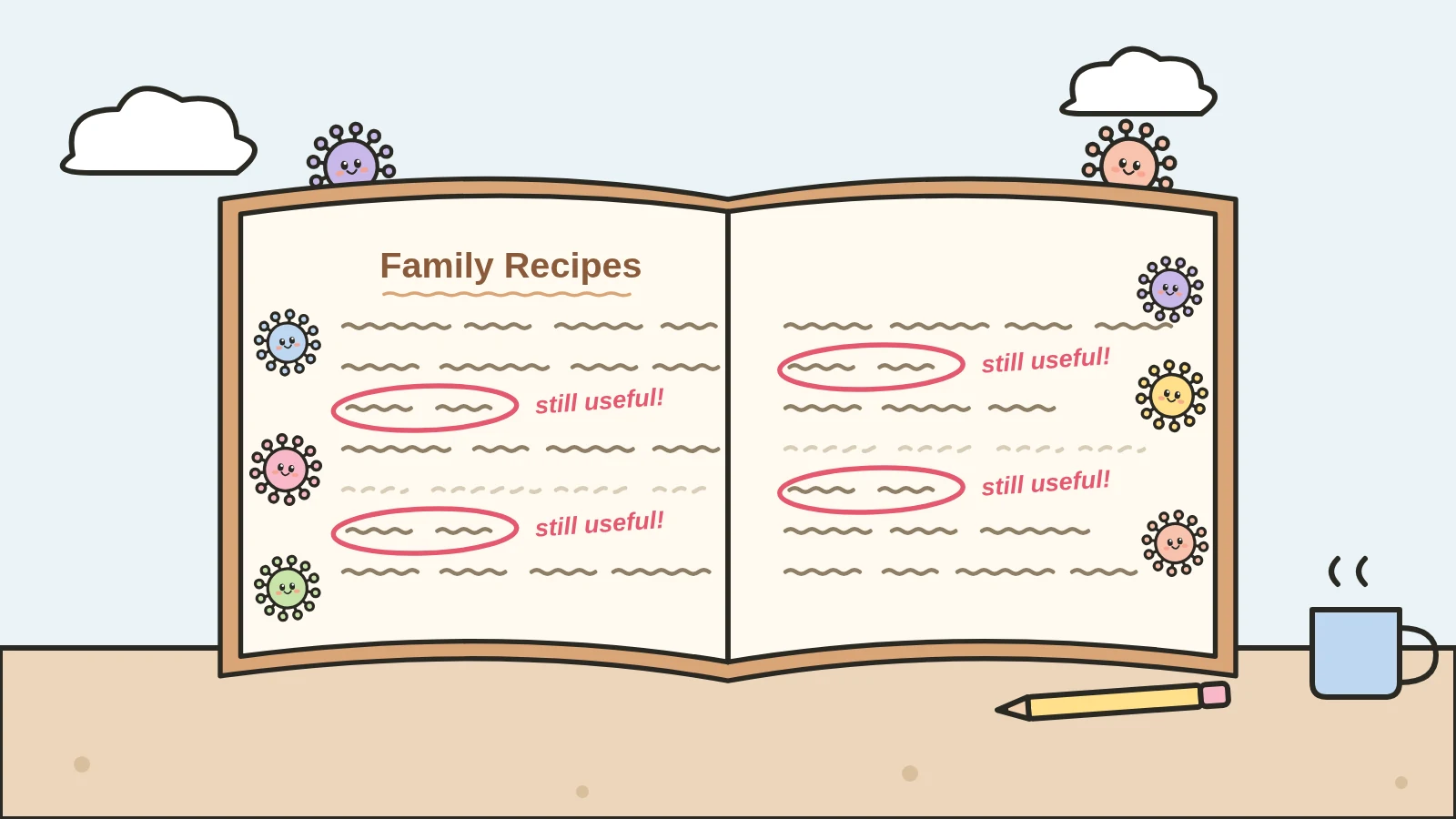
Long ago, viruses left notes in our genetic recipe book. Some still matter today.
Your DNA is like a giant family recipe book. Tucked inside are old notes left by viruses that infected our ancestors millions of years ago. Scientists call them endogenous retroviruses (EN-DAH-jen-us RET-roh-VY-rus-es), or ERVs.
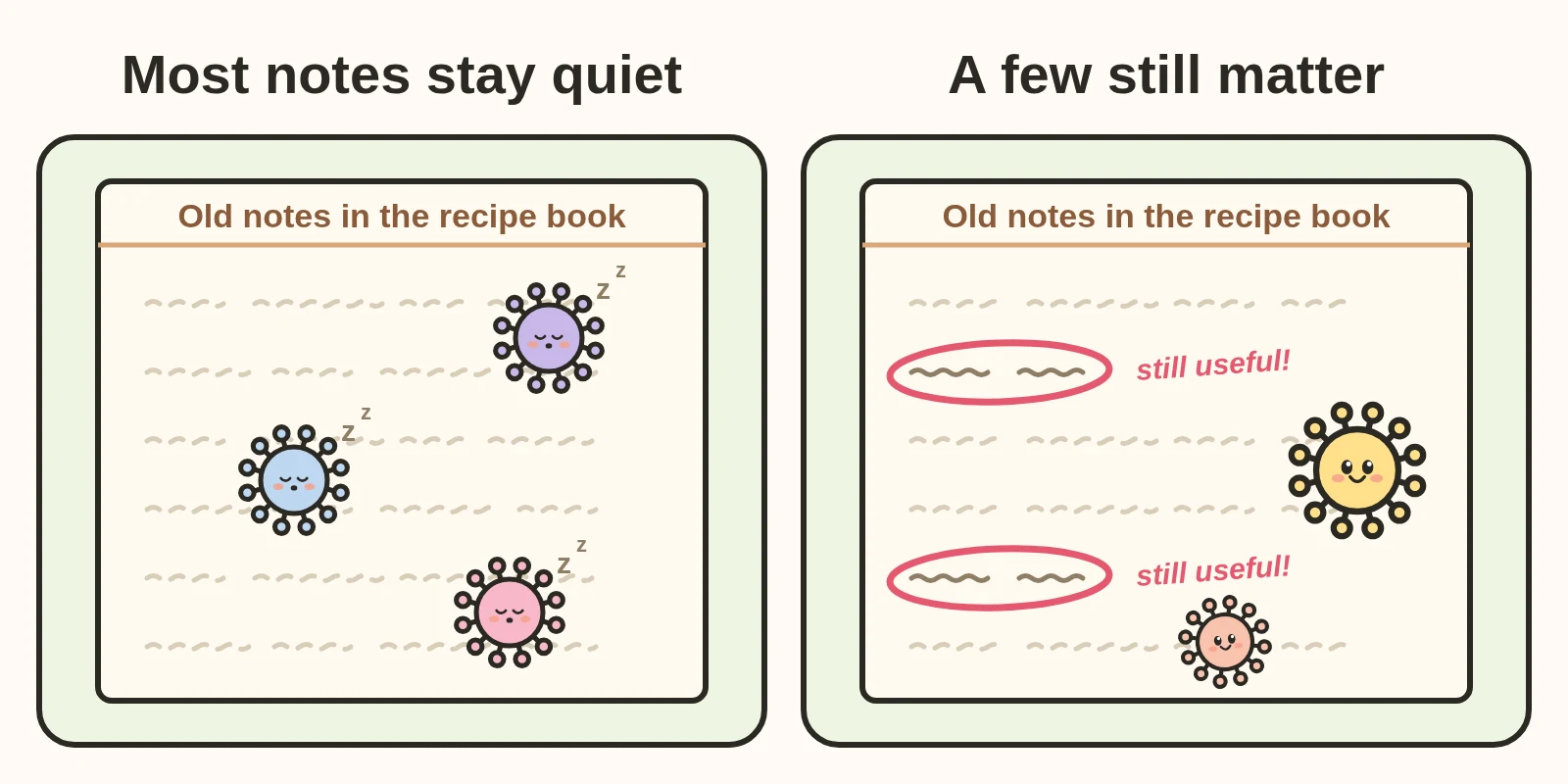
There are a lot of them. These viral leftovers make up about 8% of the human genome.1
Most are broken and quiet, like smudged notes no one reads. But a few turned out to be useful. One viral gene became syncytin (sin-SY-tin), a protein that helps build the placenta before a baby is born.2
Here’s the aging twist. In a 2023 study, researchers found that in aging cells, some of these sleeping viral notes wake back up. Their activity helped push nearby cells toward becoming “zombie cells,” the worn-out cells from last week’s post.3
Scientists are still learning whether keeping these old notes quiet could matter for healthy aging.
References
- International Human Genome Sequencing Consortium. “Initial sequencing and analysis of the human genome.” Nature 409: 860–921 (2001). doi:10.1038/35057062
- Mi S, et al. “Syncytin is a captive retroviral envelope protein involved in human placental morphogenesis.” Nature 403: 785–789 (2000). doi:10.1038/35001608
- Liu X, et al. “Resurrection of endogenous retroviruses during aging reinforces senescence.” Cell 186: 287–304 (2023). doi:10.1016/j.cell.2022.12.017
What this is not. Education only. Stories on cells.com are not medical advice. cells.com does not diagnose, treat, prescribe, run laboratory tests, or ship kits.
Simon Ng is the founder of cells.com. He has spent more than a decade on biotech finance executive teams, including at Quark Pharmaceuticals and Adverum Biosciences, and holds an MBA.