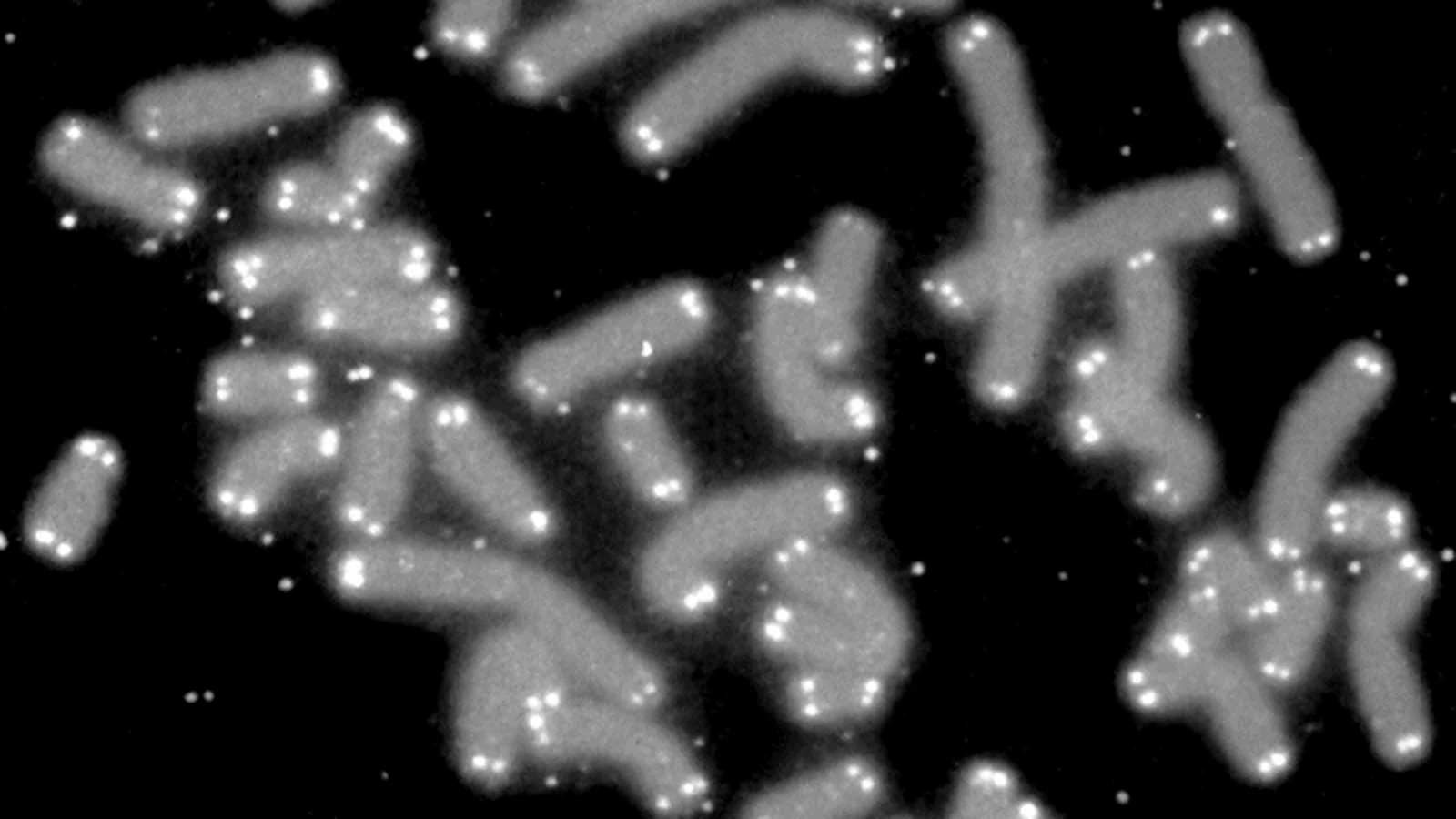
Look at the end of a shoelace. That little plastic tip keeps it from fraying. Your cells have something a lot like it.
Your DNA is packed into bundles called chromosomes3. At each end sits a protective cap called a telomere (TEE-luh-meer), made of one short DNA “word” repeated over and over2.
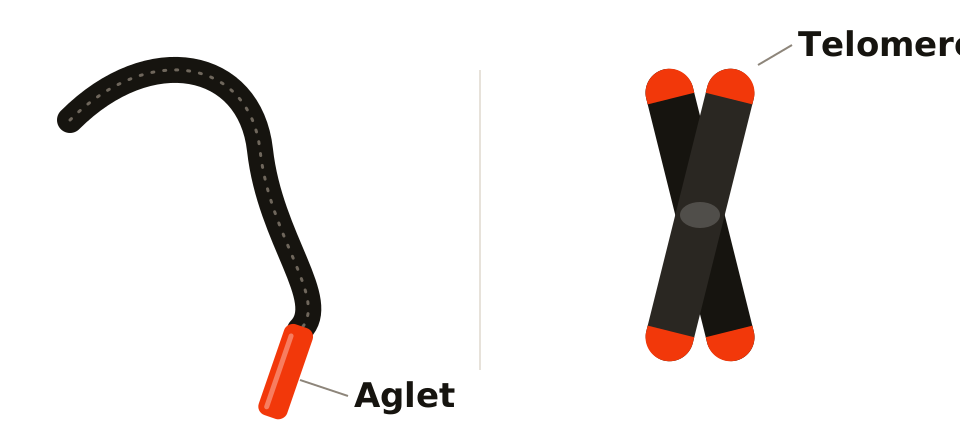
Every time a cell divides, it copies its DNA, but the copier can’t quite reach the very end. So a bit of telomere gets left off each time, like a shoelace tip wearing down a little with every tie.
When telomeres get very short, many cells stop dividing. Scientists see this as one piece of the aging puzzle.
Some cells have a helper called telomerase (tee-LOM-er-ace) that adds pieces back. Its discovery won Elizabeth Blackburn, Carol Greider, and Jack Szostak the 2009 Nobel Prize1.
Telomeres aren’t an exact clock for age or lifespan. They’re one clue among many, and proof that even the tiniest tips of your DNA have a big job.
References
- Nobel Prize in Physiology or Medicine 2009, press release, NobelPrize.org: https://www.nobelprize.org/prizes/medicine/2009/press-release/
- NHGRI Genetics Glossary, “Telomere”: https://www.genome.gov/genetics-glossary/Telomere
- MedlinePlus Genetics, “What is a chromosome?”: https://medlineplus.gov/genetics/understanding/basics/chromosome/
What this is not. Education only. Stories on cells.com are not medical advice. cells.com does not diagnose, treat, prescribe, run laboratory tests, or ship kits.
Simon Ng is the founder of cells.com. He has spent more than a decade on biotech finance executive teams, including at Quark Pharmaceuticals and Adverum Biosciences, and holds an MBA.