
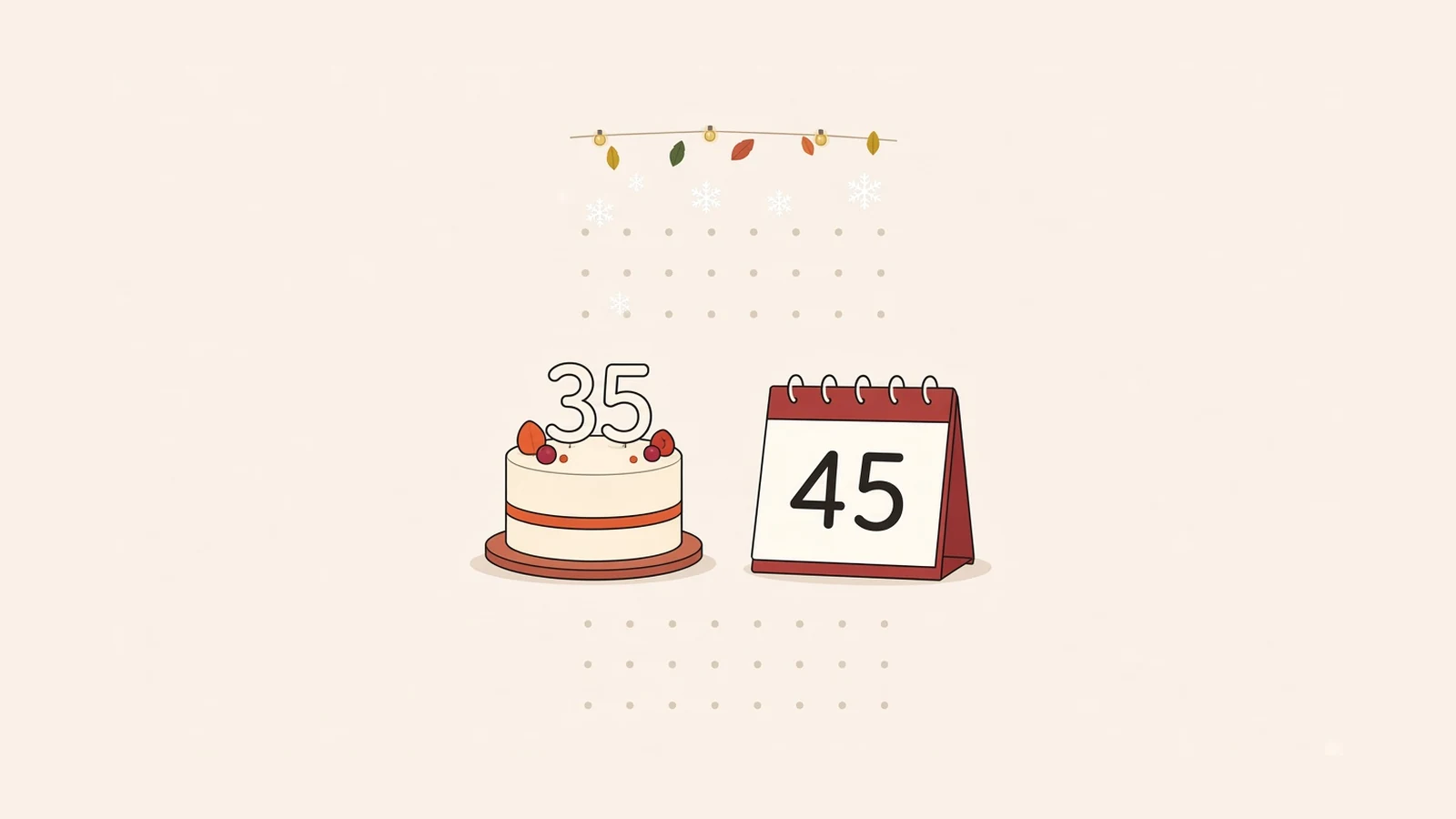
Two reports. Two different "biological ages." Is one of them wrong?
Not necessarily. Picture two kitchen timers set for two different dishes. Both tick, but they were never timing the same thing.
Age clocks are like that. Some were built to guess your birthday. Others look for signals linked to health, or to how fast you may be aging. A DNA-bookmark clock, a sugar-tag (glycan, GLY-kan) test, and a blood-chemistry score are different tools doing different jobs.
The sample matters too. One 2013 clock was built to work across many tissues, but researchers still list tissue and setting as open challenges. So blood, saliva (suh-LY-vuh), and cheek cells may not give the same number.2,3
Then there is the lab itself. In one study, measuring the same sample twice moved six well-known research clocks by up to 9 years.1 That is research lab noise, not a typical report's error bar.
So each number is an estimate, not an official age.
Tomorrow: which clocks hold still?
References
- Higgins-Chen AT, Thrush KL, Wang Y, et al. “A computational solution for bolstering reliability of epigenetic clocks: implications for clinical trials and longitudinal tracking.” Nature Aging (2022). https://doi.org/10.1038/s43587-022-00248-2
- Horvath S. “DNA methylation age of human tissues and cell types.” Genome Biology 14:R115 (2013). https://doi.org/10.1186/gb-2013-14-10-r115
- Bell CG, Lowe R, Adams PD, et al. “DNA methylation aging clocks: challenges and recommendations.” Genome Biology 20:249 (2019). https://doi.org/10.1186/s13059-019-1824-y
What this is not. Education only. Stories on cells.com are not medical advice. cells.com does not diagnose, treat, prescribe, run laboratory tests, or ship kits.