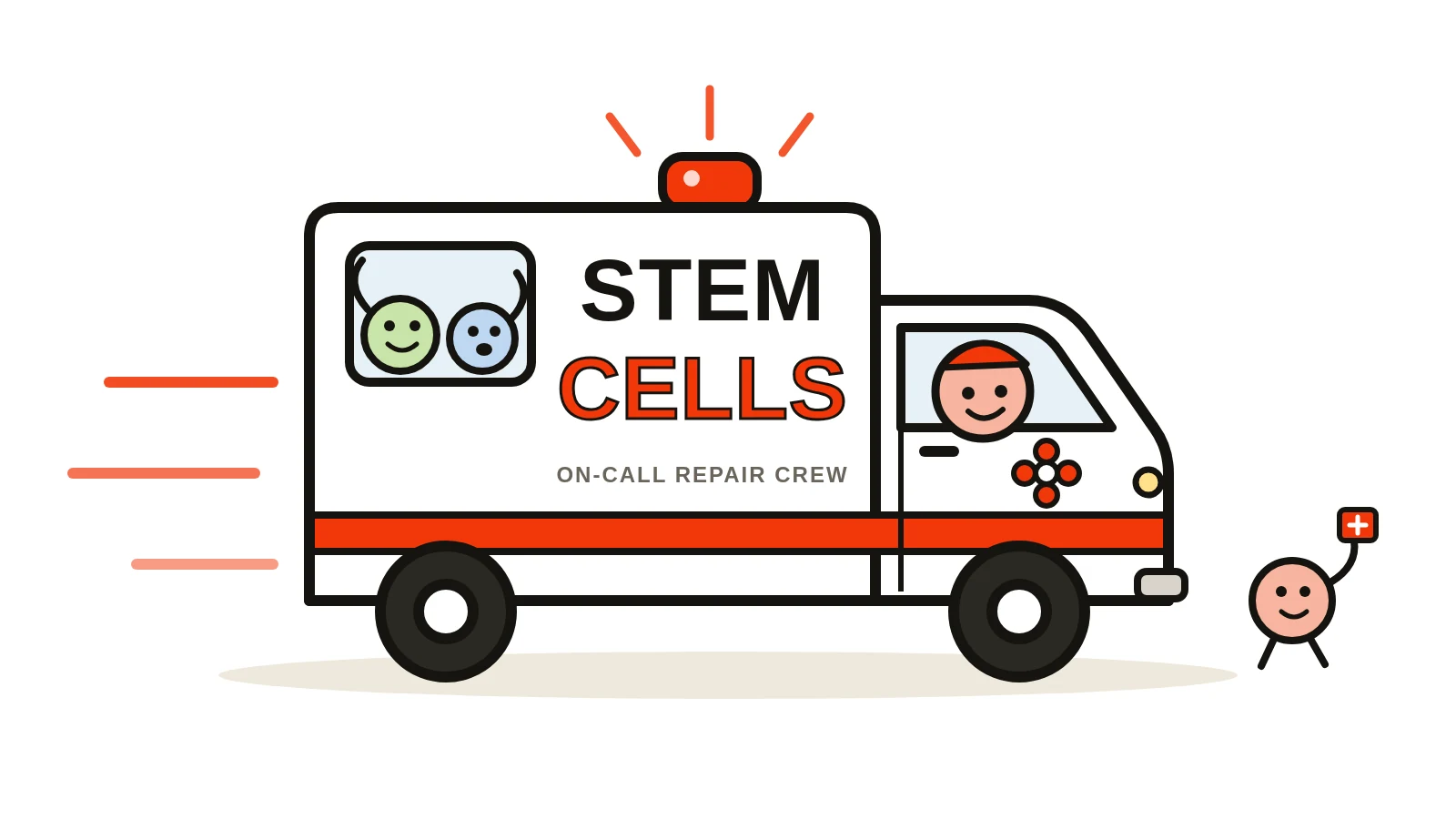
Every building needs a maintenance crew. Your body has one too: stem cells.
Most cells have one job, like a heart cell or a skin cell. Stem cells are different. When they divide, they can make more stem cells or turn into the specialized cells a tissue needs.1 Think of them as a spare-parts shop that can also build new spare-parts shops.
Your body uses them constantly. Stem cells in your bone marrow make billions of new blood cells every day. Others help replace your gut lining and patch up muscle after a hard workout.
With age, the crew gets smaller and slower. Some stem cells wear out, stop dividing, or lose their knack for making the right parts. Scientists call this stem cell exhaustion (ig-ZAWS-chun), and they count it as one of the hallmarks of aging.2
Stem cells get plenty of hype. The FDA warns that some clinics sell unapproved stem-cell products that haven’t been proven safe or effective.3
They’re one clue among many, and a reminder that you’re being quietly rebuilt every day.
References
- NIH Stem Cell Information, “Stem Cell Basics”: https://stemcells.nih.gov/info/basics/stc-basics
- López-Otín C, Blasco MA, Partridge L, Serrano M, Kroemer G. “Hallmarks of aging: An expanding universe.” Cell 186 (2023): 243–278. doi:10.1016/j.cell.2022.11.001
- U.S. FDA, “Important Patient and Consumer Information About Regenerative Medicine Therapies”: fda.gov
What this is not. Education only. Stories on cells.com are not medical advice. cells.com does not diagnose, treat, prescribe, run laboratory tests, or ship kits.
Simon Ng is the founder of cells.com. He has spent more than a decade on biotech finance executive teams, including at Quark Pharmaceuticals and Adverum Biosciences, and holds an MBA.